You Earned Every Seat at That Table — So Why Does It Still Feel Like You Snuck In?

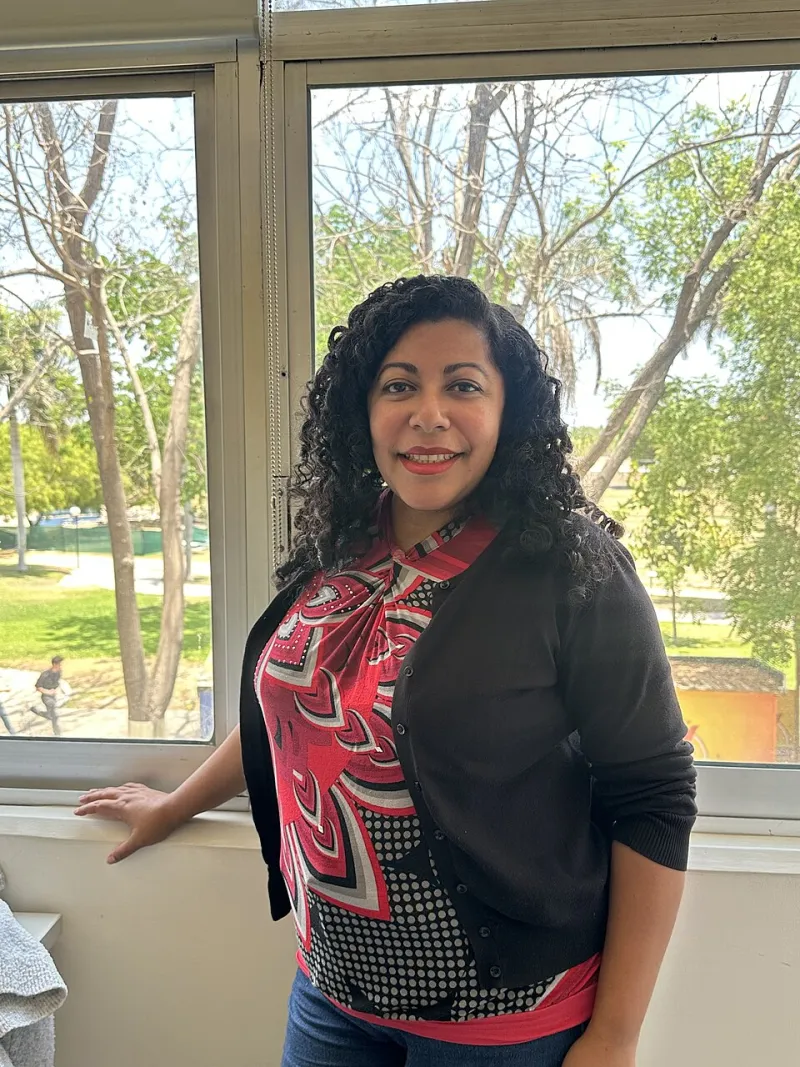
Photo: confident Latina professional woman in modern office leadership, via i.pinimg.com
You have the degree. The title. The salary you once only dreamed about in your childhood bedroom. And yet, there's this voice — persistent, low, and annoyingly fluent in Spanish — whispering that it's only a matter of time before someone figures out you don't actually belong here.
Welcome to imposter syndrome, Latina edition. And trust us, it comes with extra baggage.
Imposter syndrome — the psychological pattern of doubting your own accomplishments and living in fear of being exposed as a fraud — affects people across the board. But for Latina professionals navigating predominantly white, male-dominated workplaces in the U.S., it doesn't just show up. It moves in, rearranges the furniture, and starts paying rent.
It's Not Just Insecurity — It's a System Working Against You
Here's what gets lost in most mainstream conversations about imposter syndrome: it's not purely a mindset issue. For Latinas, the doubt is often rooted in something real.
Latinas make up only a fraction of leadership roles across corporate America. According to data from Lean In and McKinsey, Latinas represent one of the most underrepresented groups in management and executive positions. When you walk into a boardroom and you're the only brown woman in the room — again — your nervous system isn't being irrational. It's responding to an actual pattern.
"I used to think my anxiety about being 'found out' was just me being weak," says Marisol, a 34-year-old marketing director in Chicago. "But then I realized — I had been told, in a hundred subtle ways, that spaces like that weren't built for me. Of course I felt like a visitor."
That distinction matters. Imposter syndrome in Latinas isn't just internalized self-doubt — it's often a deeply rational response to years of external messaging that said you were an exception, not the rule.
The Cultural Perfectionism Nobody Talks About
Layered on top of systemic underrepresentation is something closer to home: the cultural pressure to be extraordinary just to be considered adequate.
Many of us grew up in households where excellence wasn't celebrated — it was expected. Where getting a B wasn't "pretty good" but a quiet disappointment. Where our parents sacrificed so much that anything less than perfection felt like a betrayal of everything they gave up. That love was real. That sacrifice was real. But the psychological imprint it left? Also very real.
Dr. Vanessa Flores, a licensed psychologist who works primarily with Latina clients in the Los Angeles area, explains it this way: "There's this concept I call 'inherited urgency' — the sense that you must achieve not just for yourself, but to justify your family's journey, their immigration, their struggle. That kind of pressure creates a perfectionism that's almost impossible to satisfy, because it was never really about you in the first place."
When your self-worth is tangled up in proving that your family's sacrifices were worth it, every mistake at work feels catastrophic. Every piece of critical feedback feels like evidence that you were never supposed to be here.
The "First" Tax
A lot of high-achieving Latinas are firsts — first in their family to go to college, first to land a corporate job, first to buy a house, first to sit in a particular kind of room. And while that's genuinely something to be proud of, being "the first" comes with an invisible tax.
You don't have a roadmap. You don't have someone who's walked this exact path and can tell you what's normal and what's a red flag. You're figuring out unwritten rules in real time while also trying to actually do your job. And when you stumble — because everyone stumbles — there's no inherited wisdom to fall back on. Just that voice again, telling you maybe you're not cut out for this after all.
"I didn't have a mentor who looked like me until I was 28," says Daniela, a senior engineer at a tech firm in Austin. "Before that, I was constantly second-guessing myself because I had no frame of reference. Was I doing well? Was this normal? I genuinely didn't know. And that uncertainty fed the imposter feelings constantly."
When Code-Switching Becomes Exhausting
There's also the daily performance of professionalism that many Latinas know intimately — softening your accent, laughing off a microaggression to keep the peace, carefully calibrating how much of your actual self you bring into the office. Over time, all that code-switching can deepen imposter syndrome in a sneaky way: if you're performing a version of yourself to fit in, some part of your brain starts to believe the real you doesn't fit.
"I spent years making myself smaller, quieter, less 'ethnic,'" admits Yolanda, a finance manager in New York. "And then I'd wonder why I felt like a fraud. But the fraud wasn't me — it was the version of me I'd constructed to survive that environment."
Practical Ways to Start Dismantling the Doubt
So what do you actually do about it? A few things that work — not because they're magic, but because they're honest.
Name it out loud. Imposter syndrome loses some of its power when you stop treating it like a shameful secret. Saying "I'm feeling like a fraud right now" to a trusted colleague or friend can interrupt the spiral before it takes over.
Build a receipts folder. Literally. Create a folder — digital or physical — where you keep emails of praise, performance reviews, award notifications, and moments when someone acknowledged your work. On the bad days, open it. Your brain will lie to you. Documentation doesn't.
Find your people. Community is not a luxury for Latinas in professional spaces — it's a survival strategy. Organizations like Latinas in Tech, Hispanic Alliance for Career Enhancement (HACE), and local Latina professional networks exist precisely because we need spaces where we don't have to explain our experience from scratch.
Separate your worth from your performance. This is the long game, and it often requires therapy or intentional inner work. Your value as a human being is not a quarterly metric. You are not only as good as your last project.
Push back on perfectionism — gently. Ask yourself: would I hold a white male colleague to this same impossible standard? If the answer is no, that's data. You're applying a double standard to yourself, and you deserve the same grace you'd give someone else.
You Were Never the Problem
Here's what the Wise Latina Club wants you to hold onto: imposter syndrome in Latinas is not a personal failing. It is the entirely predictable result of being exceptional in systems that were not designed with you in mind, raised with love that sometimes came wrapped in pressure, and navigating spaces where your presence is still treated as remarkable rather than normal.
You belong in every room you've worked to enter. Not because someone gave you permission. Because you earned it — and then some.
The work now is learning to believe that, even when the voice disagrees.