The Speak-Up Penalty: Why Latina Women Pay a Higher Price for Having a Voice at Work
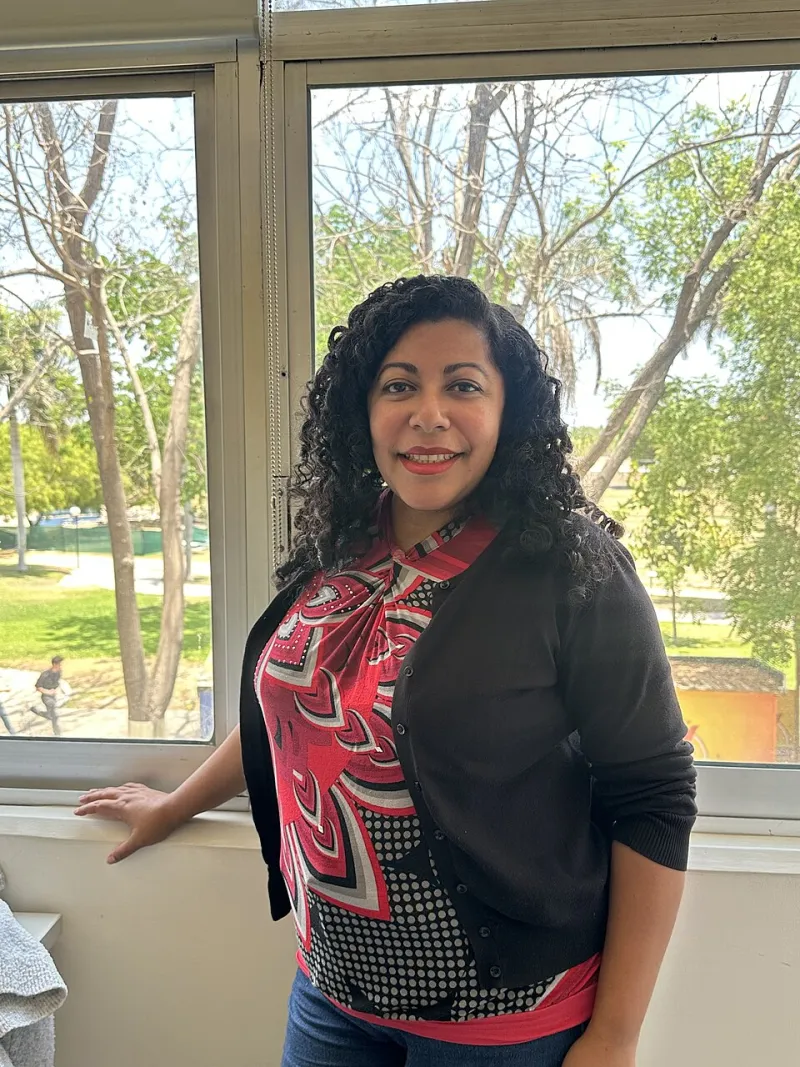
Photo: EmilyyCM, CC BY-SA 4.0, via Wikimedia Commons
Let's start with a scenario that's probably way too familiar.
You're in a meeting. You've done the research, you know the numbers, and you have something genuinely valuable to add. You speak up. You push back on a flawed strategy, or maybe you just advocate for your team's resources. And then—whether it happens in that room or three weeks later in a quiet performance review—you feel the chill. A shift in how your manager looks at you. A comment about your "communication style." A door that quietly closes.
Now imagine your white female colleague doing the exact same thing. Same room. Same words. Different reception.
This isn't a feeling or a chip on anyone's shoulder. It's a documented, measurable phenomenon that organizational psychologists have started calling a visibility tax—the disproportionate professional and social cost that Latina women absorb simply for taking up space, advocating for themselves, or challenging the status quo at work.
What the Research Actually Says
Let's get into it. Studies on workplace bias have consistently shown that assertiveness is evaluated differently depending on who's expressing it. For white men, speaking up reads as leadership. For white women, it's tolerated—sometimes even rewarded, though still subject to penalties. For Latina women, the calculus is harsher and more complicated.
A 2023 report from LeanIn.Org and McKinsey found that women of color face a steeper climb on nearly every metric of professional advancement—and that they're significantly less likely than white women to say their managers advocate for their career development. But the visibility tax goes deeper than promotion rates. It lives in the small, daily moments that quietly reshape how a woman decides to show up.
Organizational psychologists point to what's called "double jeopardy bias"—where being both a woman and a racial minority compounds the scrutiny a person faces. For Latinas specifically, this is layered with cultural stereotypes that paint them as either "fiery and difficult" or "warm and compliant." There's almost no neutral ground. Speak too softly, and you're overlooked. Speak too directly, and suddenly you're "aggressive" or "emotional."
"The standard for what counts as professional behavior was written by and for a very specific type of person," says one HR consultant who works with Fortune 500 companies and asked to remain anonymous. "When Latina women operate outside of what's been coded as 'normal,' they get penalized for it—even when they're doing the exact same things that get white women promoted."
The Cultural Double Bind
Here's where it gets even more layered. Many Latina professionals carry an additional weight that their white counterparts simply don't: the cultural expectation of communal care. The idea that you're not just representing yourself, but your family, your community, your entire heritage. That you should be grateful, gracious, accommodating.
Those messages don't come from nowhere. They come from our abuelas, our moms, the telenovelas we watched, the way we were raised to put family first and ego last. And while there is genuine beauty and strength in those values, they can also be weaponized against us in professional settings—by others who expect us to stay small, and sometimes by our own internalized scripts.
The result is a specific kind of exhaustion. Latina leaders often describe doing a constant internal calculation before they speak: Is this worth it? Will this label me as difficult? Can I afford to push back right now? That cognitive load—that perpetual risk assessment—is itself a tax. It costs energy, creativity, and sometimes the very ideas that would have made the biggest difference.
Real Consequences, Not Just Bad Vibes
The visibility tax doesn't stay abstract. It shows up in concrete, career-altering ways.
Latina executives interviewed for this piece described being passed over for high-visibility projects after speaking up in leadership meetings. One VP at a media company recalled being told she was "too intense" in a performance review—the same quarter she'd led her team through a major product launch. Another director in tech shared that after she publicly disagreed with a senior leader's strategy in a town hall (and turned out to be right), she was quietly removed from a cross-functional task force she'd helped build.
"There's this unspoken rule," she told us. "You can be smart, but don't make them feel it. You can be right, but don't let them see it too clearly."
This isn't just unfair. It's a genuine business problem. Organizations that penalize Latina voices are actively silencing some of their most strategic thinkers—and then wondering why their leadership pipelines look so homogenous.
Navigating the Tax Without Disappearing
So what do you do? Because the answer is not to shrink. Let's be very clear about that. The visibility tax is a systemic problem, not a personal failing, and the solution is never to make yourself smaller.
But wise navigation matters. Here's what Latina leaders and career coaches suggest:
Build your coalition before the meeting. If you know you're going to push back on something, have those conversations one-on-one first. When you speak up in the room, you're not alone—you're voicing something that already has support. It changes the dynamic entirely.
Document everything. Keep a running record of your contributions, your wins, your initiatives. When review season comes, you have receipts. This isn't paranoia—it's protection.
Name the pattern when you can. Not every environment is safe for this, but when you have the capital, calling out a double standard directly—calmly, with specifics—can be more powerful than you think. "I noticed that when David made a similar point last month, it was received differently. I'd love to understand why." That's not aggressive. That's precise.
Find your sponsors, not just your mentors. Mentors give you advice. Sponsors use their political capital to advocate for you when you're not in the room. Every Latina professional needs at least one sponsor who will say your name out loud in the right places.
Protect your energy strategically. You do not have to fight every battle. Choosing where to spend your visibility isn't the same as hiding. It's resource management.
The Bigger Ask
For organizations reading this—and we know you're out there—the visibility tax is your problem to fix, not ours to simply survive.
That means training managers to recognize how bias shapes their perception of "professionalism." It means creating feedback systems that flag patterns of differential treatment. It means actively tracking whose voices get amplified in meetings and whose get talked over. And it means building a culture where advocating for yourself isn't a career risk—for anyone.
Latina women are not asking for a lower bar. We're asking for the same bar to actually apply to us.
Because the truth is, the women paying the highest visibility tax are often the ones with the clearest vision for where things need to go. And any organization that keeps penalizing them for saying so deserves exactly the mediocrity it gets.
We're done calculating whether we can afford to speak. It's time for institutions to calculate what it costs them when we don't.