Lo Que Dijo Mi Abuela: How the Words Passed Down in Our Families Became Our Secret Superpower

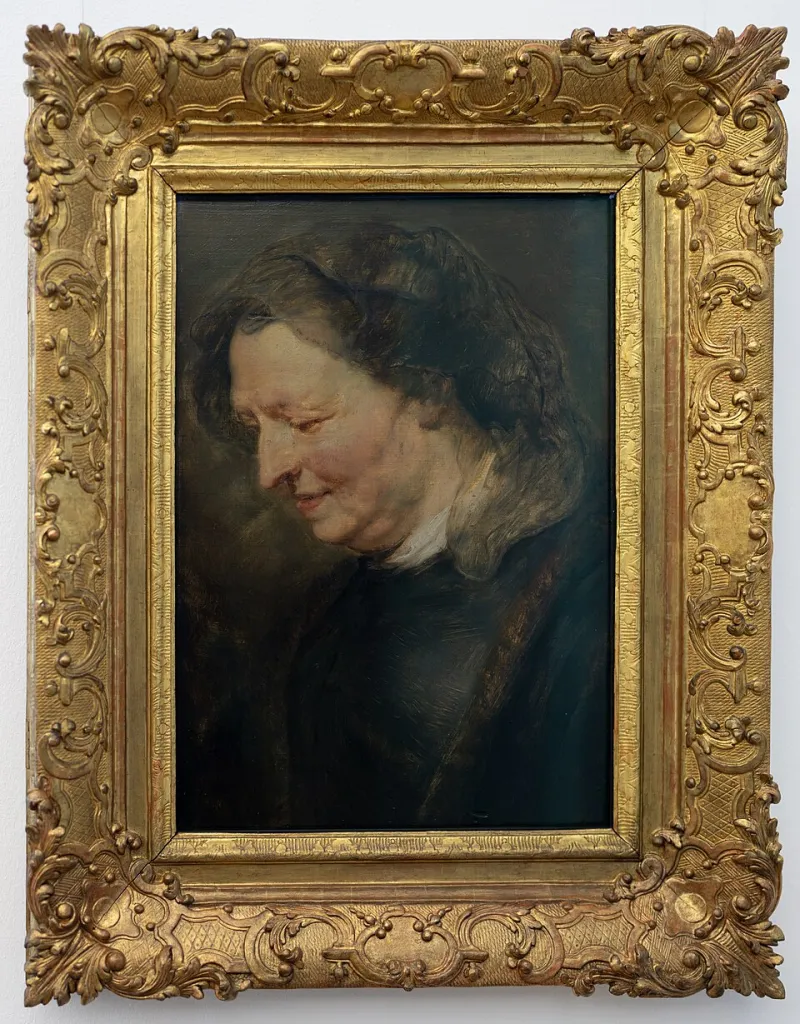
Photo: Basile Morin, CC BY-SA 4.0, via Wikimedia Commons
There's a specific kind of silence that happens right before a Latina mother delivers a truth you weren't ready for. You know the one. Maybe she tilted her head slightly, maybe she set down her coffee cup with just a little too much intention. Whatever the tell, you knew something was coming — something that would stick with you for the next twenty years.
For many of us, those moments were our first masterclass in communication.
We've spent a lot of time being told that our cultural backgrounds are obstacles to navigate in professional spaces — that we're "too emotional," "too direct," or that we need to sand down our edges to fit neatly into corporate America. But what if the opposite is true? What if everything our mothers and grandmothers taught us — the dichos, the dramatic storytelling at the dinner table, the way our tías could broker peace between feuding cousins without raising their voice above a whisper — was actually preparing us to lead?
The Dicho as a Blueprint for Critical Thinking
"Camarón que se duerme, se lo lleva la corriente." The shrimp that falls asleep gets carried away by the current.
If you grew up hearing phrases like this, you didn't just absorb a colorful saying — you absorbed a framework for urgency, adaptability, and situational awareness. Dichos are essentially compressed wisdom, distilled through generations of experience and survival. They're punchy, they're memorable, and they get straight to the point.
Sounds a lot like good communication strategy, doesn't it?
Dr. Norma Mendoza-Denton, a linguistic anthropologist whose work focuses on language and identity in Latinx communities, has long argued that bilingual and bicultural individuals develop what she describes as a heightened "metalinguistic awareness" — an almost intuitive ability to read a room, code-switch, and tailor a message to an audience. We've been doing this since we were kids, translating not just Spanish to English but entire cultural contexts, emotional registers, and unspoken expectations.
That skill? Recruiters will pay good money to teach it in a corporate workshop. We got it at the kitchen table for free.
Storytelling as Negotiation
Ask any successful Latina executive how she learned to tell a compelling story and there's a good chance she'll eventually circle back to a family member. Maybe it was the way her grandmother narrated telenovela plots with full dramatic re-enactments. Maybe it was watching her mom explain a billing dispute to a customer service rep with the patience of a saint and the precision of a lawyer.
Storytelling in Latina households isn't just entertainment — it's persuasion. It builds context. It creates emotional connection before the ask ever lands. In negotiation theory, this is called "framing," and it's one of the most effective tools in any communicator's arsenal.
Maria Gonzalez, a Chicago-based HR director who immigrated from Guadalajara as a teenager, puts it plainly: "My mother never just asked for something. She told you why it mattered, who it would affect, and what it would mean for everyone involved. By the time she got to the actual request, you were already on her side. I do the exact same thing in salary negotiations and it works every single time."
This isn't manipulation. It's emotional intelligence in action — the ability to understand what someone needs to hear in order to truly listen.
Directness Is Not a Flaw. It's a Feature.
One of the persistent myths about Latina communication styles is that we're "aggressive" or "too much." And yes, many of us have had to learn when and how to modulate our delivery in spaces that weren't designed with us in mind. But let's be honest about what's really happening there: directness gets coded as aggression when it comes from us in ways it simply doesn't when it comes from others.
The directness we inherited is rooted in respect — respect for the other person's time, respect for the truth, and respect for the relationship. In many Latin American cultures, dancing around an issue isn't considered polite; it's considered evasive. You say what you mean because you trust the other person can handle it.
In workplaces that are increasingly craving authentic leadership and transparent communication, this is a profound advantage. Leaders who communicate with clarity and emotional honesty build more trust, resolve conflict faster, and create teams where people actually feel safe to speak up.
The Emotional Intelligence We Didn't Know Was Rare
Growing up in a household where feelings were named, processed, and yes, sometimes loudly expressed, gave many of us an emotional vocabulary that a significant chunk of our colleagues are still developing in their thirties.
We learned to read nonverbal cues because we had to. We learned to hold space for someone's grief while also managing our own because that's what you did when a family member got bad news. We learned to repair relationships because in a tight-knit community, burning a bridge wasn't really an option.
All of that translates. Directly and powerfully.
In leadership research, emotional intelligence — the ability to identify, understand, and manage your own emotions as well as those of others — consistently ranks as one of the top predictors of effective leadership. It's why teams thrive under certain managers and quietly fall apart under others. It's the difference between a boss and a leader.
And many of us have been practicing it since before we could drive.
Reclaiming the Inheritance
Here's the thing nobody tells you when you're busy trying to assimilate into professional spaces: you don't have to choose between being culturally yourself and being professionally successful. Those two things were never actually in conflict. The conflict was manufactured by spaces that weren't built for us.
The wisdom our mothers passed down — through dichos, through stories, through the way they handled hard conversations at the dinner table — is not a liability. It is a legitimate, documented, research-backed communication advantage. And the sooner we stop apologizing for it and start strategically deploying it, the more ground we're going to take.
So the next time someone tries to tell you that you're "too direct" or "too emotional" in a meeting, remember: you were trained by women who survived, built, and led with nothing but their words and their wisdom.
That's not something to tone down. That's something to own.