Being Seen Shouldn't Cost This Much: The Hidden Tax on Latina Visibility
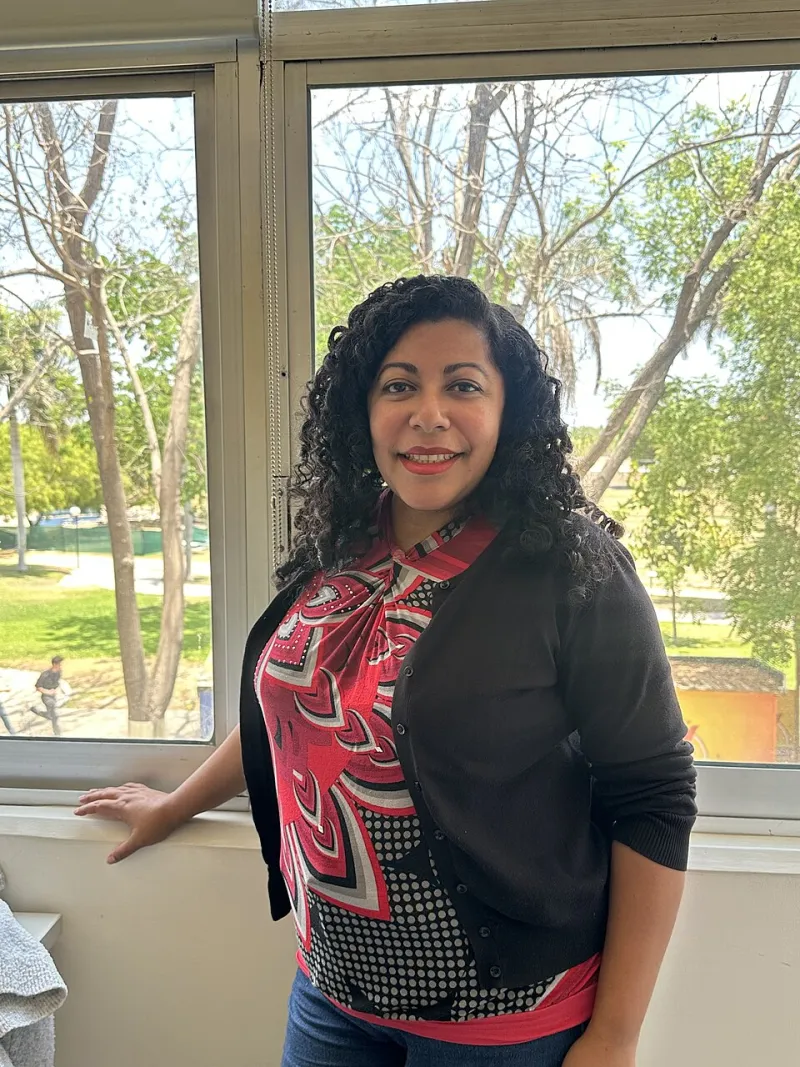
Photo: EmilyyCM, CC BY-SA 4.0, via Wikimedia Commons
There's a moment a lot of Latinas know intimately. You've worked harder than anyone else in the room. You've finally landed the role, the seat, the platform, the office. People are calling it historic. Your tía is crying happy tears. And then — almost immediately — something shifts. The scrutiny arrives. The think pieces. The critics picking apart not just your work, but your accent, your name, the way you dress, who you remind them of, who you don't.
Welcome to the visibility tax. Nobody warned you it was coming, and nobody else in that room is paying it.
What the Visibility Tax Actually Is
Let's define it clearly, because it deserves a name. The visibility tax is the disproportionate emotional, psychological, and professional labor that Latinas absorb simply because they are visible in spaces that weren't originally designed for them. It's the extra scrutiny applied to their credentials, the assumption that they represent an entire community rather than themselves, and the unspoken expectation that they should be grateful just for being allowed in — even when they earned every inch of that access.
This isn't abstract. When Supreme Court Justice Sonia Sotomayor was nominated, her legal record — one of the most distinguished in the country — was almost immediately overshadowed by debates about a single line from a speech she gave years earlier. Her white male counterparts' confirmation hearings were not dissected the same way. When Alexandria Ocasio-Cortez entered Congress, she became one of the most scrutinized freshmen legislators in modern history — her clothing, her dancing, her tone all became national news. Her policies were almost secondary to the performance of tearing her down.
This pattern isn't limited to politics. Latina executives report being questioned about their qualifications in rooms where their white male peers are simply assumed to be competent. Latina journalists and creators face comment sections that go far beyond critique into something uglier and more personal. The visibility that was supposed to be the reward turns out to come with a cost structure no one disclosed upfront.
The Symbol Trap
One of the cruelest aspects of the visibility tax is what we might call the symbol trap. When a Latina rises to a position of prominence, she often stops being seen as an individual and becomes a stand-in for every Latina who ever existed. Every misstep is framed as a failure of her community. Every success is credited to her identity rather than her intellect. She is never just herself — she is a representative, a pioneer, a proof of concept, a cautionary tale, depending on who's doing the framing.
This is exhausting in a way that's hard to explain to people who've never experienced it. Imagine walking into every professional situation carrying the invisible weight of an entire demographic on your back. You can't just have a bad quarter — you're setting back Latina representation. You can't just have a strong opinion — you're being aggressive and proving a stereotype. You can't just succeed quietly — your success must be made legible, palatable, and useful to the institutions that allowed it.
Dr. Lorena García, a sociologist who studies Latina identity in professional spaces, describes it this way: when you're the first or the only, you become a data point before you become a person. And data points don't get to have boundaries.
The Psychological Toll Nobody Talks About
Research consistently shows that women of color in high-visibility roles experience higher rates of burnout, anxiety, and what psychologists call "identity threat" — the persistent stress of feeling like your belonging in a space is conditional and constantly being re-evaluated. For Latinas specifically, this is compounded by cultural expectations around strength, sacrifice, and not making a fuss.
We're raised, many of us, to be resilient. To push through. To not let them see you sweat. And while that resilience is genuinely powerful, it can also mask a serious problem: we're absorbing damage that we're told is just part of the deal. It isn't. It shouldn't be.
There's also the compounded grief of watching other Latinas pay the same tax in real time. You see a Latina politician get torn apart in ways her male colleagues never are, and you feel it personally. You watch a Latina creator get harassed off a platform she built with her own hands, and something in you goes quiet. The visibility tax isn't just paid individually — it's witnessed collectively, and that witnessing has its own weight.
Refusing to Pay in Full: Strategies for Staying Visible Without Losing Yourself
None of this means Latinas should step back from visibility. Absolutely not. The answer isn't to make ourselves smaller to avoid the tax — it's to stop pretending the tax is fair, and to build systems that help us carry the load differently.
Name it out loud. When you're being held to a double standard, say so. Not defensively — clearly. "I notice my qualifications are being questioned in ways I don't see applied to my colleagues" is a complete sentence. Naming the dynamic disrupts it.
Separate your identity from your role. You are not a symbol. You are a person who happens to occupy a visible role. Practice the internal discipline of reminding yourself that your worth is not contingent on how well you represent your community. You didn't apply to be a mascot. You applied for a job.
Build your circle deliberately. Isolation amplifies the visibility tax. When you're surrounded by other Latinas — and by allies who genuinely get it — the weight gets distributed. Find your people. Invest in those relationships like the professional infrastructure they are.
Set media and public boundaries without apology. You do not owe anyone an explanation for every decision you make. You do not have to engage with every critic. Visibility does not mean unlimited access to your inner life. Curate what you share and with whom, and release the guilt around it.
Advocate for structural change, not just individual resilience. Push for mentorship programs, sponsorship pipelines, and institutional policies that don't just let Latinas in the door but actively reduce the tax they're charged once inside. Individual coping strategies matter, but they're not a substitute for systemic accountability.
The Tab Ends Here
The visibility tax is real, it's documented, and it is deeply unfair. But naming it is the first step toward refusing it. Latinas in every field — politics, media, business, entertainment, academia — are doing extraordinary work under conditions that would make most people fold. That's not a testament to how much we should be expected to endure. It's a testament to how much we've already overcome.
You deserve to be seen. You deserve to take up space. And you deserve to do both without being handed a bill that nobody else in the room is asked to pay.
The wise move? Keep showing up. Keep being visible. And start keeping receipts.